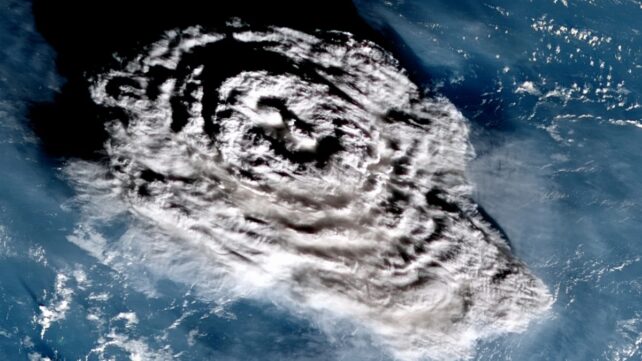
A cataclysmic volcanic eruption is one of the most violent and disruptive things our planet can do.
Vast clouds of ash and gas burst into the atmosphere, while blisteringly hot molten rock surges upward and rolls across the surface, destroying anything in its path.
But volcanoes can be a force for good, too. Their eruptions can create some of the most fertile farmlands on the planet, build new lands, and help cycle chemicals between Earth's atmosphere and crust.
Now, scientists have observed a never-before-seen volcanic phenomenon that may help researchers better understand atmospheric chemistry – and even inform future atmospheric clean-up efforts.

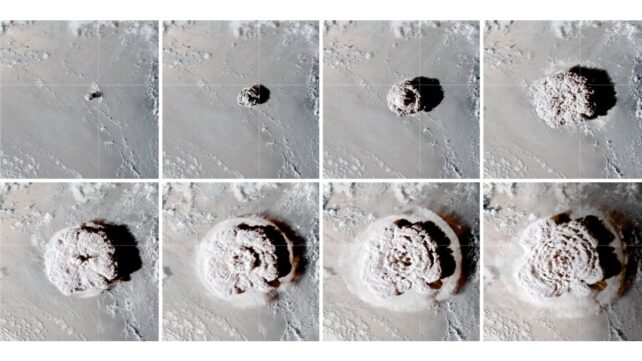
In the explosive 2022 Hunga Tonga-Hunga Ha'apai eruption in the South Pacific, satellites detected formaldehyde – evidence that some of the methane released by the volcano was rapidly destroyed in its massive plume of ash and gas.
"It is known that volcanoes emit methane during eruptions, but until now it was not known that volcanic ash is also capable of partially cleaning up this pollution," explains atmospheric scientist Maarten van Herpen of Acacia Impact Innovation BV in the Netherlands, first author of the new study.
Methane is always naturally present in the atmosphere. Produced by living organisms and geological activity, it helps keep our planet warm enough to sustain life – at least, below a certain threshold.
Too much methane, however, exacerbates the greenhouse effect, trapping heat and warming the planet to unsustainable levels.
A lot of human activity produces methane, and scientists are looking for ways to bring the levels down.
One way to rapidly break down methane is to introduce a bit of chlorine. Chlorine is reactive because it has an unpaired electron that wants to find something else to grab onto.
When chlorine is paired with methane, this electron gloms a hydrogen atom, starting a chain reaction that ultimately unravels the methane into other compounds. Formaldehyde is a brief link in this chain.
In 2023, a team led by van Herpen revealed that they had observed this process in the atmosphere for the first time, triggered by dust from the Sahara and ocean spray.
A number of the ingredients involved in that finding were also present in the Hunga Tonga-Hunga Ha'apai eruption.
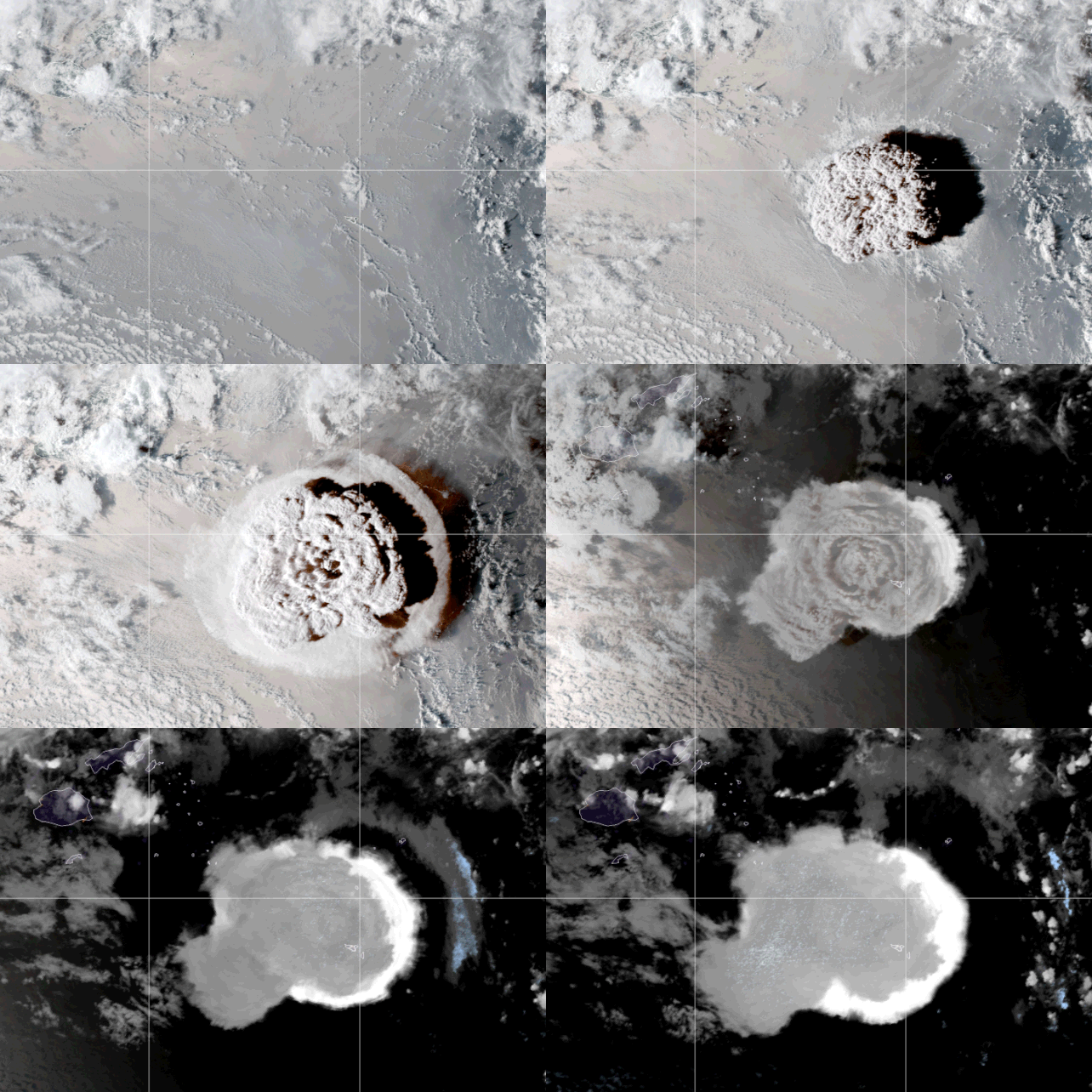
The volcano erupted from under the surface of the Pacific Ocean, blasting seawater and vapor upward.
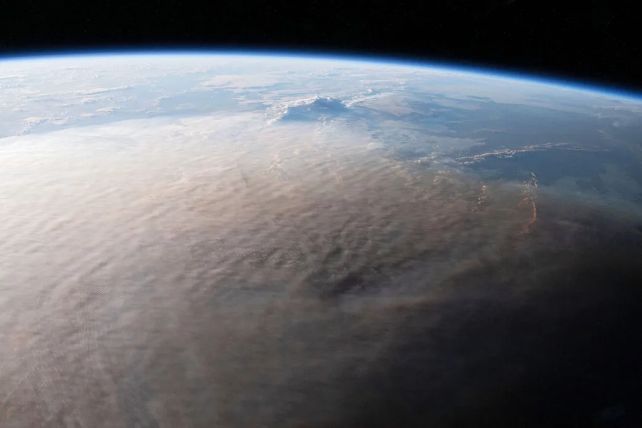
It also produced an enormous plume that reached the highest altitude ever recorded, injecting gases and aerosols high into the atmosphere, including what the researchers believe was a vast amount of methane, as well as salt and other mineral particles.
The researchers theorized that when sunlight hit this mix of ingredients, reactive chlorine radicals formed in the volcanic plume – triggering the rapid disintegration of the methane within.
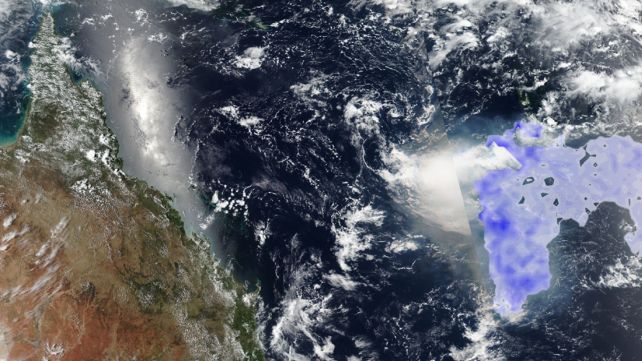
When they examined the volcanic plume, the smoking gun was right there.
"When we analyzed the satellite images, we were surprised to see a cloud with a record-high concentration of formaldehyde," van Herpen says.
"We were able to track the cloud for 10 days, all the way to South America. Because formaldehyde only exists for a few hours, this showed that the cloud must have been destroying methane continuously for more than a week."

The destruction of the methane was not total. The researchers estimated that around 900 metric tons (992 US tons) of volcanic methane were destroyed by chlorine oxidation per day, compared to an estimated 330-kiloton total methane output.
So the volcano did not come close to cleaning up its own mess.
What the research does show is that methane removal in the atmosphere can be observed and quantified, even if it requires extraordinary events. The result offers proof of concept that chlorine-mediated methane cleanup may be possible in theory.

Practice will likely prove more difficult, but every journey has to start with a first step.
Related: The World's Most Mysterious Volcano Can Finally Be Explained
"It's an obvious idea for industry to try to replicate this natural phenomenon – but only if it can be proven to be safe and effective," says chemist Matthew Johnson of the University of Copenhagen.
"Our satellite method could offer a way to help figure out how humans might slow global warming."
The research has been published in Nature Communications.