
We know that almost two-thirds of people with Alzheimer's disease are women, but what's not fully clear is why.
A new study in mice points to a possible clue.
The reseach suggest levels of the hormone estrogen, and an often overlooked structure between brain cells, may be linked to memory issues that are a hallmark of the disease.
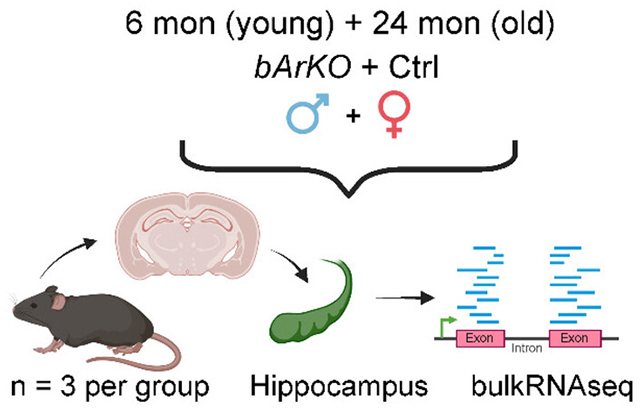
A team from Northwestern University in the US genetically engineered male and female mice so they were unable to produce estrogen – either specifically in the brain, or through their entire bodies.
In female mice without estrogen in their brains and bodies, old age was associated with spatial memory problems and reduced social interaction. Young and old female mice without any estrogen at all also showed signs of depression.
However, the male mice in the study weren't affected.
Further analysis revealed that gene activity patterns in the mice, related to a lack of estrogen, matched up with similar patterns in the same genes in the brains of people who have developed Alzheimer's.
The implication is that estrogen levels in women's brains, significantly lowered after menopause, are closely linked to a higher risk of both memory issues and potentially Alzheimer's disease.
The caveat is that this study only involved mice, and further testing is needed.
"We have provided some of the most compelling evidence that estrogen is so important for memory function and other mood functions in the female brain," says obstetrician and gynecologist Serdar Bulun.
"This should motivate clinicians to be more aware of the essential role of estrogen for women's brains, because once memory is gone, it's gone."
The genes that became more active in female brains without estrogen were linked to the extracellular matrix (ECM).
The ECM network fills the spaces between brain cells and helps with memory, brain maintenance, and brain growth.
As vital as it is for brain health and support, the ECM hasn't received as much research attention as other types of brain cells, including neurons and glial cells (which help keep neurons firing safely).

The ECM could be another potential target for Alzheimer's drugs – treatments aiming to restore the normal gene activity that a loss of estrogen disrupts appear to be worth investigating, suggest the researchers.
However, it's still early days.
The results in mice don't necessarily mean that an estrogen deficit is triggering spatial memory issues in humans, or that the changes in gene activity in the ECM are harmful – but it does indicate that this might be the case.
"Our findings will hopefully motivate future studies to better understand how this matrix is altered in post-menopausal women, and how it could potentially induce susceptibility to Alzheimer's disease," says molecular biologist Hong Zhao.
Clearly, not all women develop Alzheimer's, and not all men avoid it: It's a disease that involves many contributing factors, from genetics to lifestyle, but there's now a growing amount of evidence that estrogen is a significant factor in women.
Many previous studies and trials have examined the toxic tangles and protein clumps that build up in Alzheimer's brains. They're key characteristics of the disease, but so far, attempting to target them with treatments has yielded mixed results.
However, the estrogen connection has been made before, but previous research into using hormone replacement therapy (HRT) to reduce dementia risk hasn't been able to come to any definitive conclusions about its effectiveness.
Related: An Early Clue to Alzheimer's May Appear as Young as 45, Study Finds
These new findings, including the gene expression component and a specific analysis of brain-only estrogen reduction, will provide greater clarity going forward.
This could eventually get us closer to understanding the male-female imbalance we see with Alzheimer's.
"More research is needed to understand how estrogen affects the female brain and why estrogen loss increases Alzheimer's disease risk in women," says Zhao.
"Understanding these mechanisms could help researchers develop safer and more effective HRT strategies to prevent or slow the progression of Alzheimer's disease in women."
The research has been published in Aging Cell.