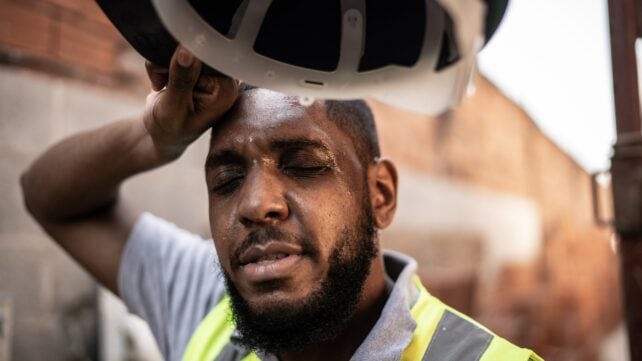
As record heat interrupts work, overloads hospitals, and claims thousands of lives around the world, international experts are calling for climate change to be officially recognized as a global health emergency, in The Lancet's 2026 Countdown on Health and Climate Change.
The report shows risks and harms associated with extreme heat and droughts continue to rise faster than climate action, despite growing investment in the transition away from fossil fuels across the past decade.
"The rate of increase in many climate-related health threats is accelerating, while heat deaths linked to climate change have reached a record-high, and the economic toll is battering vulnerable sectors and communities the hardest," says climate health researcher Marina Romanello, executive director of The Lancet Countdown.

It's been 10 years since the first Countdown report was published, bringing together experts in public health, climate, energy, data, economics, and more, to track the impacts of climate change on 54 different health indicators.
The authors of the latest report are seriously concerned about how slow the international community has been to make the changes necessary to protect human health.
"A decade after the Paris Agreement, our findings are unambiguous: the health harms of climate change are growing faster than the world's response to them, and in many cases even accelerating," Romanello says.
"Real progress has been made in clean energy, health system readiness, and health-protective regulation, all of which are already delivering health benefits to local communities.
"However, progress has been too slow, too small, and isn't reaching those who need it most. That is why we are calling for climate change to be formally recognized as a global health emergency, with health placed at the center of every climate decision."
In 2023, 71.5 percent of heat-related deaths worldwide can be attributed to climate change. The total was 710,000; if it weren't for climate change, that number would be around 200,000, according to estimates.
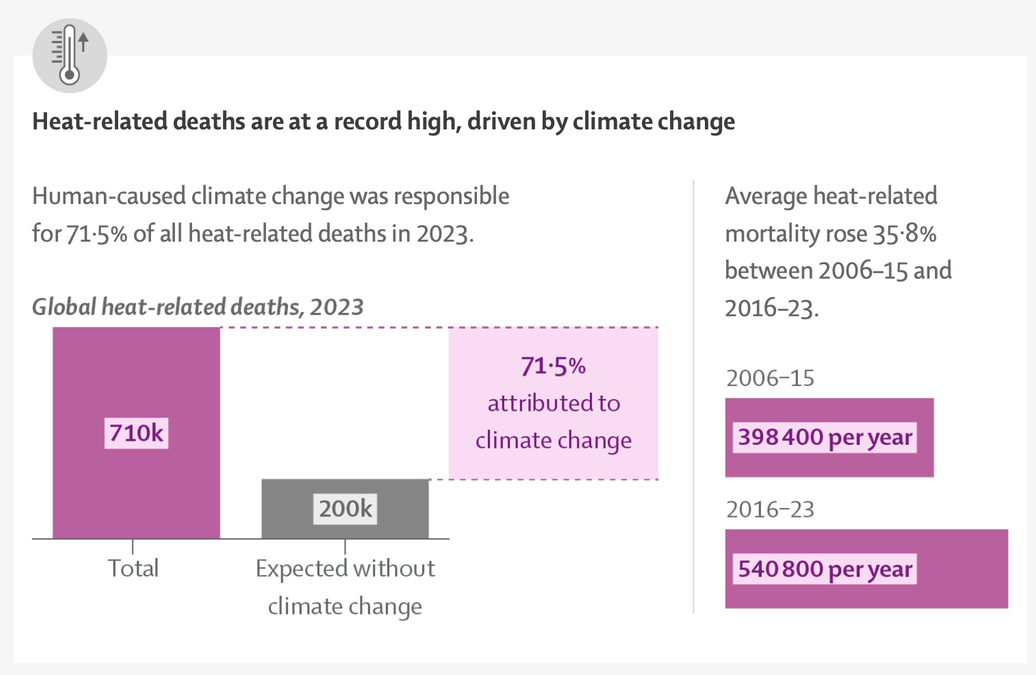
Between 2016 and 2023, an estimated 540,800 deaths each year were linked to heat. Climate change was responsible for 68 percent of them (369,900), which is a big jump from 55 percent of heat-linked deaths per year in the previous decade, 2006-2015.
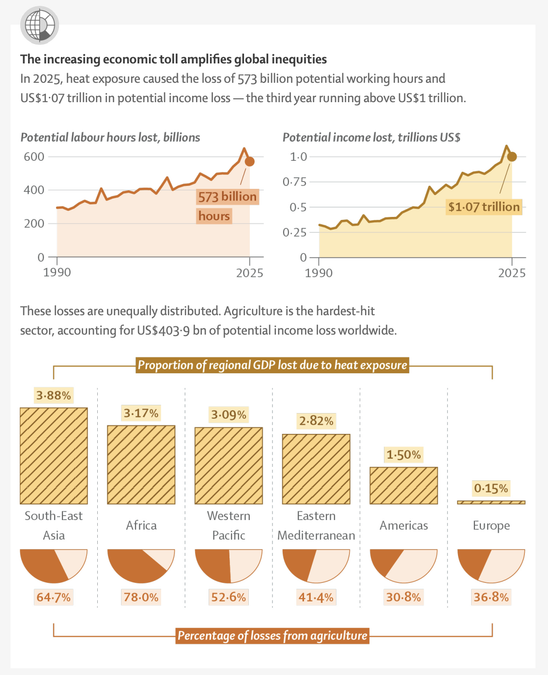
In 2025, heat cost global economic productivity around US$1.07 trillion just by interrupting people's ability to work, with the greatest losses seen in the GDP of countries in Southeast Asia and Africa.
Globally, agriculture and construction industries were particularly hard-hit by heat-related losses, because they depend on people doing physically demanding work outdoors.
The human body has its limits, and increasingly, the conditions outdoors are becoming unbearable, if not lethal.
"These numbers point to a clear emergency," says Romanello.
"The risks become even more profound when you consider how different hazards interact and compound. At the same time, drought is spreading, and the world is swinging to water extremes, some drying out, while others are flooding."
Drought can quickly lead to food shortages and malnutrition, poor water and air quality, and mental health issues, while floods put people at greater risk of infectious, respiratory, and digestive diseases. Both of these extremes put already-stretched health systems under strain.
Meanwhile, by 2040 the world's 100 largest oil and gas companies are planning to exceed fossil fuel production by 150 percent of what would be needed to keep global warming below 1.5°C.
The researchers lay out a plan to address the crisis.
They say the World Health Organization and United Nations must declare climate change a global health emergency, coordinate governments to put human health at the center of climate decisions, and increase grant-based funding to finance climate and health initiatives.
They also say global governments must "prioritize and promote the urgent,
just, and equitable reduction of greenhouse gas emissions as a global health imperative".
"Ten years ago, we proposed that responding to climate change could offer the greatest health opportunity of the 21st century through adaptation efforts and rapid progress in phasing down fossil fuels and other emission sources", says global health expert and The Lancet Countdown co-chair Anthony Costello.
"A decade on, we have proof that health-centered climate action works: cleaner air, more resilient healthcare and warning systems are protecting health and saving lives globally. But the pace and scale of emissions reduction remains entirely out of step with the pace and scale of the harm."
The full report is available here.
This article was fact-checked by Fiona MacDonald and edited by Fiona MacDonald. While we pride ourselves on our process, we are only human. If you spot a mistake, please let us know.