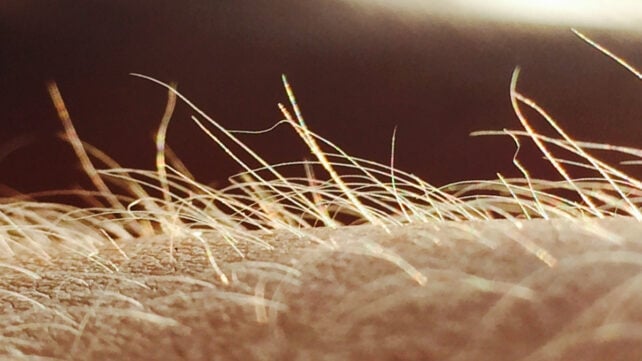
If you're feeling itchy, it's probably a warning sign from your body that something alien is on your skin.
Dry flakes of skin, dirt, bug bites, or even your own hair tickling your nose: all of these triggers make us squirm and yearn to itch, which, in many scenarios (though not all), works quite well to remove the offending irritant.
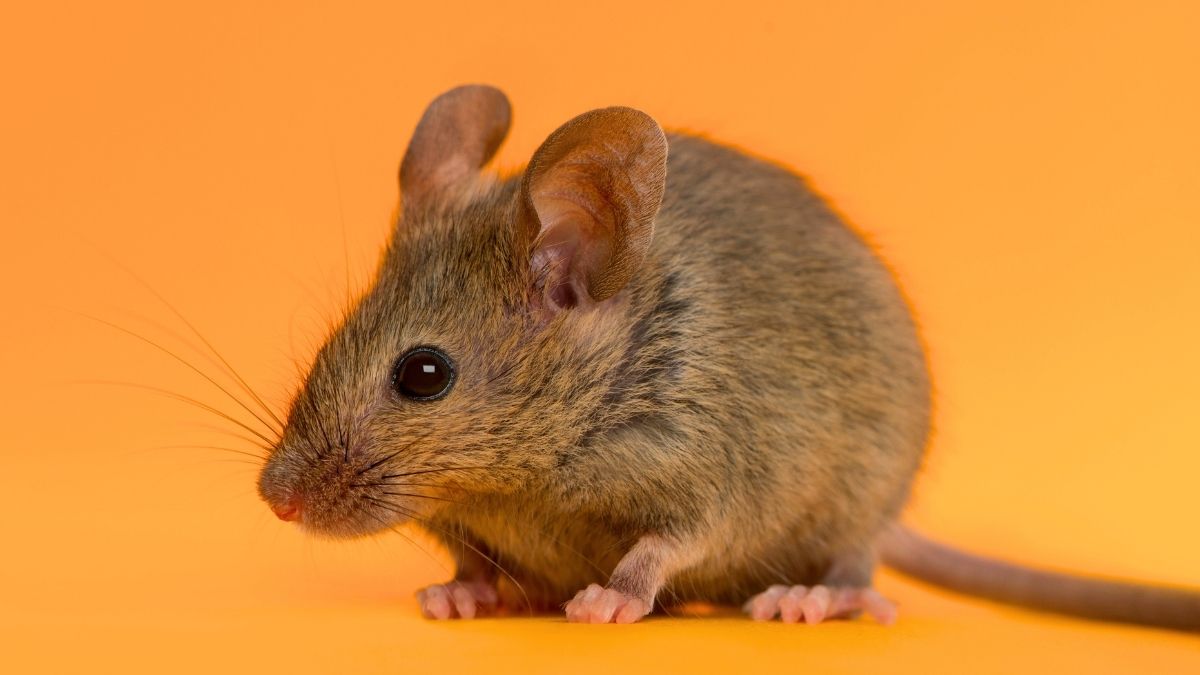
A new study in mice suggests this protective impulse may even have its own dedicated sensory organ: vellus-like hairs.
In mice, these hairs grow most prolifically behind their ears and on their hind paws. Their skin is at its most exposed in these areas.
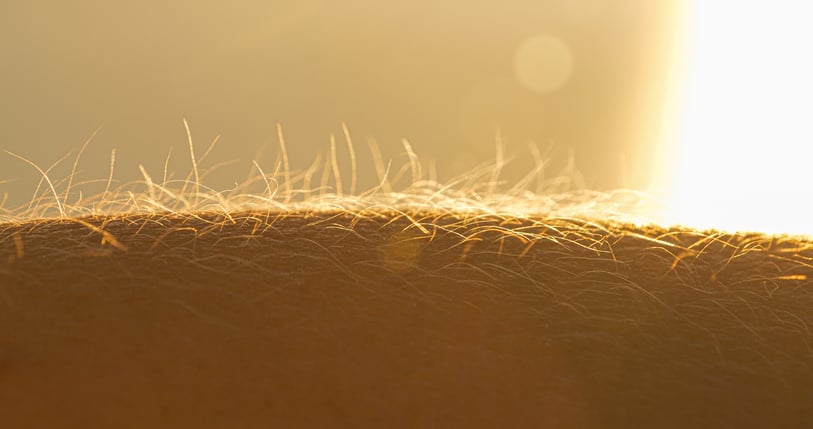
Humans, by contrast, are almost totally covered in vellus hairs, also known as 'peach fuzz'. This kind of hair seems to go hand-in-hand with very exposed areas of skin.
Vellus hairs play an important role in regulating our body temperature: they stand on end when we're cold, and wick sweat away from our skin when we're hot.
But they also seem involved in sensing certain kinds of touch, especially when it comes to triggering our compulsion to itch.
There's been a fair bit of research into itchiness triggered by direct skin contact with irritants, but the authors of the new study, led by biologists at the University of Michigan, noticed that hair movement-induced itching has been under-explored.
"For instance, the gentle vibration of vellus hair on the chin, in contrast to the forehead, face, or arms, induces intense itching in healthy human subjects," they note in their research paper, which was published in Neuron.
"These findings suggest the presence of specialized hair structures and afferents dedicated to this form of mechanical itch."
They turned to mice to get a closer look at how it all works.
There's no guarantee that if something works a certain way in mice, it will be the same in humans – but since we share a similar, recent evolutionary history, there is often some pretty good overlap.
"In humans, tactile perception is governed by two distinct types of hair: terminal and vellus hairs. By contrast, rodents have drawn considerable attention for their pelage hairs, which include guard, awl/auchene, and zig-zag types that are essential for mechanosensation and thermoregulation," the authors explain.
"Beyond these well-studied hair types in rodents, certain body regions feature atypical hair variants with unique functions."
Which brings us to the vellus-like hairs.
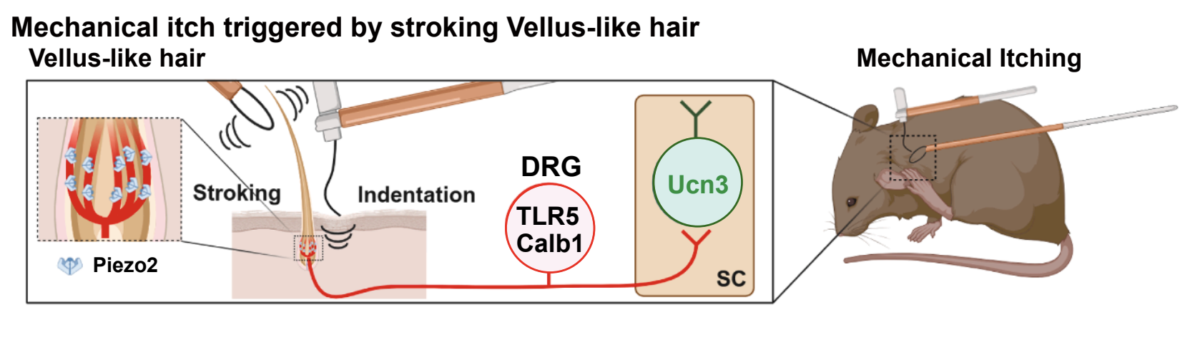
Through a series of experiments, the researchers discovered each of these hairs is attached to a particular kind of fast-conducting sensory neurons that transmit the sensation of 'itch' with just a light touch of the hair.
In mice with chronic skin inflammation in the vellus-like hair areas, these neurons were firing on all cylinders, and the mice were visibly itchy.
But when the researchers switched off the genes that activate this particular genre of sensory neuron, mice did not register the inflammation as itchy.
"These specialized hairs and their associated nerve terminals are crucial for regulating trichoknesis [itching triggered by hair contact] in chronic itch, underscoring their importance in abnormal sensory processing," the researchers report.

It may seem odd to investigate what makes mice itch, of all creatures, but because of our shared genes, these animals are used widely in biomedical research to test whether treatments for human conditions might work, before starting clinical trials.
Understanding how this kind of itching works in mice – and how similar it is to the itching reflex of human vellus hairs – gives scientists an indication that mice could be ideal test subjects in search of treatments for our own itchy ailments, like insect bites, eczema, and poison ivy exposure.
Related: Scientists Uncover The Nerve Pathway That Makes Stress Worsen Eczema
"We need a new pathway to target if we want to treat chronic itch," molecular biologist Bo Duan says.
"And our research suggests that this population of neurons could be a target in the future."
The research was published in Neuron.
This article was fact-checked by Michael Irving and edited by Rebecca Dyer. While we pride ourselves on our process, we are only human. If you spot a mistake, please let us know.