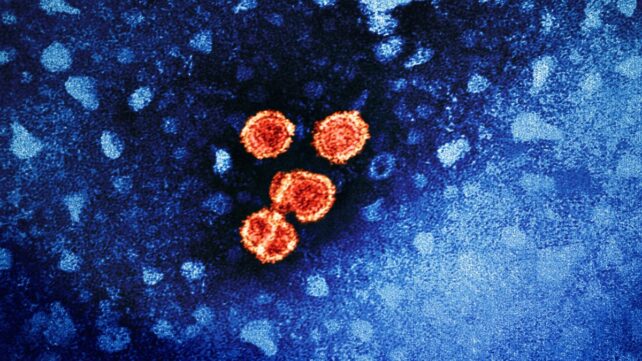
The cell churn that goes on inside our bodies is vast, with hundreds of billions of cells dying off and being replaced every day. Keeping that constant biological overhaul running smoothly is crucial in maintaining good health.
Researchers have now identified a new 'footprint of death' that cells leave behind as they die to guide the immune system in its waste-removal role.
It seems this process can also be hijacked by viruses to spread themselves further.
The discoveries, published in a recent study in Nature Communications led by a team from La Trobe University in Australia, have implications for understanding how programmed cell death and renewal keep us healthy.
Further down the line, it may also be possible to develop drug treatments that make use of these death footprints – and prevent them from being infiltrated by viruses.
"Billions of cells are programmed to die each day as a part of normal turnover and disease progression, and until now, it was believed that the cell fragmentation process during cell death was random and fairly simple," says biochemist Ivan Poon, from the La Trobe Institute for Molecular Science (LIMS).
"Our findings demonstrate the complexity of this process and highlight how each step in the process is actually critical to help the dying cell break down efficiently and to be cleared away by the immune system."
A process called apoptosis is often used to schedule cell death in the body, taking out cells that are no longer needed, damaged, or potentially harmful. It was this process that the new study took a closer look at.
Using 3D timelapse imagery to analyze different types of cells as they died, the researchers identified the proteins left behind by apoptosis, and the way the immune system subsequently interacted with them.
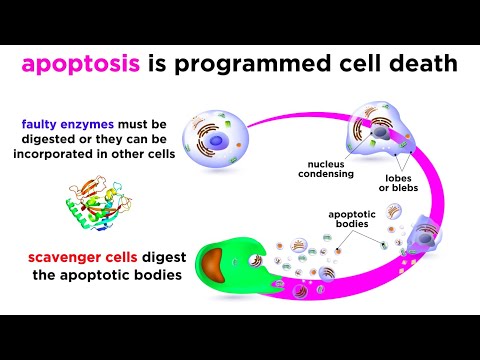
As expected, the death debris included extracellular vesicles (EVs), small pockets of proteins, DNA, and RNA that cells shed to signal to each other.
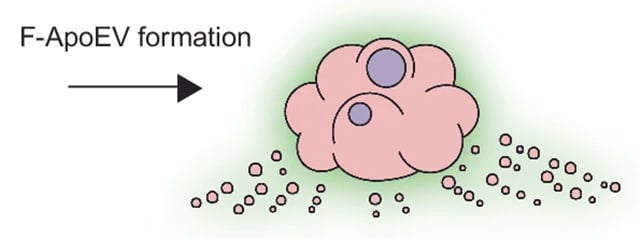
In this case, the researchers spotted a previously unknown type of EV, which they're naming F-ApoEVs: footprint of death-derived, apoptosis-triggered EVs.
These F-ApoEVs act a little like a trail of breadcrumbs that the immune system can follow to clean up cells that have perished.
"We know that the body clears away dead cell fragments to prevent them lingering and causing inflammation and autoimmune diseases such as Systemic Lupus Erythematosis, and we saw F-ApoEVs are readily cleared from the site of cell death," says lead researcher Stephanie Rutter, a biochemist from LIMS.
"What we didn't expect was how viruses can also take advantage of this process and cause infection by hiding in F-ApoEVs."

When the researchers infected dying cells with influenza, the virus hid some of its particles inside the F-ApoEVs. As the immune system cleans up after the cell, these pathogen fragments get spread to neighboring, healthy cells.
It's a new way for viruses to spread that we haven't seen before.
These mechanisms still need testing and analyzing outside of a lab, but potential treatments could improve F-ApoEVs function to better protect against autoimmune diseases and to stop viral spread.
"This study has revealed that dying cells can continue to communicate from the grave and may impact immune function," says cell biologist Georgia Atkin-Smith, from the Walter and Eliza Hall Institute of Medical Research in Australia.
Fundamentally, these processes are all about communication: cells talking to each other and all staying on the same page in terms of biological maintenance.
There's now another element to that communication that can both support and potentially damage health. Future research could help scientists get more clarity on exactly how F-ApoEVs work and how they might be manipulated.
Related: We Thought This Cell Death Phenomenon Was Irreversible, But We Were Wrong
"Understanding this basic biological process could open new avenues of research to develop new treatments that harness these steps and help the immune system better fight disease," says Poon.
The research has been published in Nature Communications.
This article was fact-checked by Carly Cassella and edited by Michael Irving. While we pride ourselves on our process, we are only human. If you spot a mistake, please let us know.