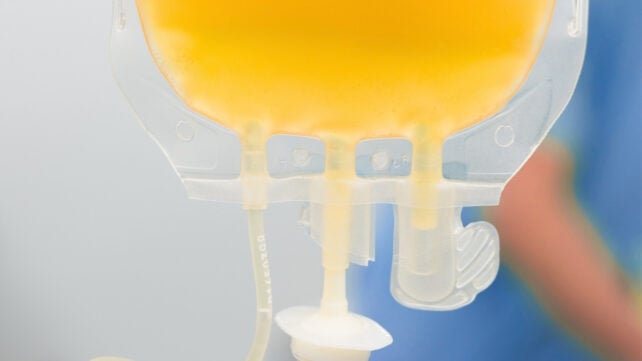
For a patient losing blood, every minute without treatment can matter. But the plasma needed to help control bleeding isn't always available where the injury happens.
Conventional plasma must be stored frozen and then thawed before transfusion. Those requirements can make it difficult to carry and use in ambulances, disaster zones, rural communities, or battlefields far from hospital infrastructure.
Now, the US Food and Drug Administration (FDA) has licensed Ezplaz Freeze Dried Plasma, making it the first FDA-licensed freeze-dried plasma product in the United States.
The approval, reported in JAMA, gives emergency teams a plasma product that can be stored at room temperature and be prepared for transfusion within minutes.
Plasma is the liquid portion of blood. It carries proteins, including clotting factors that help the body stop bleeding. Patients may need plasma when severe bleeding or illness has depleted several of these factors at once.
Fresh frozen plasma preserves those proteins, but its need for frozen storage creates a logistical problem. In an emergency far from a hospital, the necessary freezer, thawing equipment, and time may simply not be available.
Ezplaz was developed to remove some of those barriers. It is made by freeze-drying a single unit of fresh frozen plasma.
The resulting dry product can be stored for 12 months at temperatures between 2 and 25 degrees Celsius (36 to 77 degrees Fahrenheit), according to the FDA's regulatory assessment.
When plasma is needed, healthcare professionals add the sterile water supplied in the kit. According to the FDA's assessment, the product can be reconstituted in about 2.5 minutes.
Each kit includes one unit of freeze-dried plasma, a 250-milliliter bag of sterile water, a fluid transfer set, and a transfusion set. The plasma is packaged in a flexible plastic bag rather than a glass bottle, reducing the risk of breakage during transport.
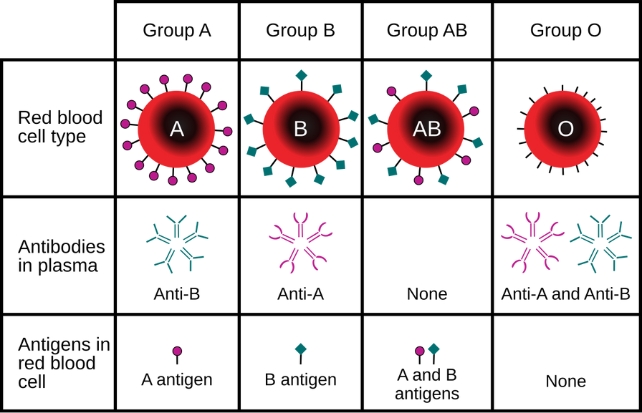
The product is available as group AB plasma and group A plasma with low levels of anti-B antibodies. These types were selected to reduce the risk of a dangerous mismatch when a patient's blood type is not yet known.
Blood group compatibility is a major challenge in emergency medicine. Scientists are also investigating ways to make donated blood compatible with more recipients, but those experimental approaches are not yet ready for routine clinical use.

Ezplaz is licensed for adults who require plasma when other plasma products are unavailable. This could include bleeding patients, people undergoing massive transfusions, and some patients taking the blood thinner warfarin who need its effects reversed urgently.
However, the approval does not mean freeze-dried plasma is risk-free or that it should replace conventional plasma whenever frozen products are available.
Like other plasma transfusions, Ezplaz can cause allergic reactions, transfusion-related lung injury, circulatory overload, or reactions caused by incompatible blood types. It should not be used in people with a history of hypersensitivity to plasma products or those with immunoglobulin A deficiency.
The FDA's assessment also identified thromboembolic events, in which a blood clot blocks a vessel, as an incompletely characterized risk. A required post-approval study will monitor this risk in patients receiving the product.

The clinical evidence available before approval included an early safety study involving 24 healthy adults. No deaths, serious adverse events, or treatment-related adverse events were reported in that trial.
However, a small study in healthy volunteers cannot fully show how the product will perform in severely bleeding patients under real-world emergency conditions.
Freeze-dried plasma is not a new idea.
It has been used in military medicine since World War II, but concerns about the transmission of infections, including hepatitis, through pooled plasma later brought large-scale production to a halt.
Improvements in donor screening, testing procedures, and pathogen-reduction technologies have since supported the development of newer freeze-dried plasma products.
Related: Scientists Engineer Blood Clots That Stop Severe Bleeding in Seconds
The FDA says Ezplaz's overall safety profile is consistent with that of other plasma products and concluded that its benefits outweigh its risks for the limited circumstances covered by the license.
That carefully defined use is important.
The FDA assessment does not establish whether Ezplaz improves survival compared with conventional plasma. Its immediate advantage is logistical: it can make plasma available where frozen products may not be accessible quickly enough.
For someone bleeding far from a fully equipped hospital, turning a package of freeze-dried plasma into a transfusion-ready product within minutes could give medical teams an option they previously lacked.
The report was published in JAMA.
This article was fact-checked by Rachel Garner and edited by Rebecca Dyer. While we pride ourselves on our process, we are only human. If you spot a mistake, please let us know.